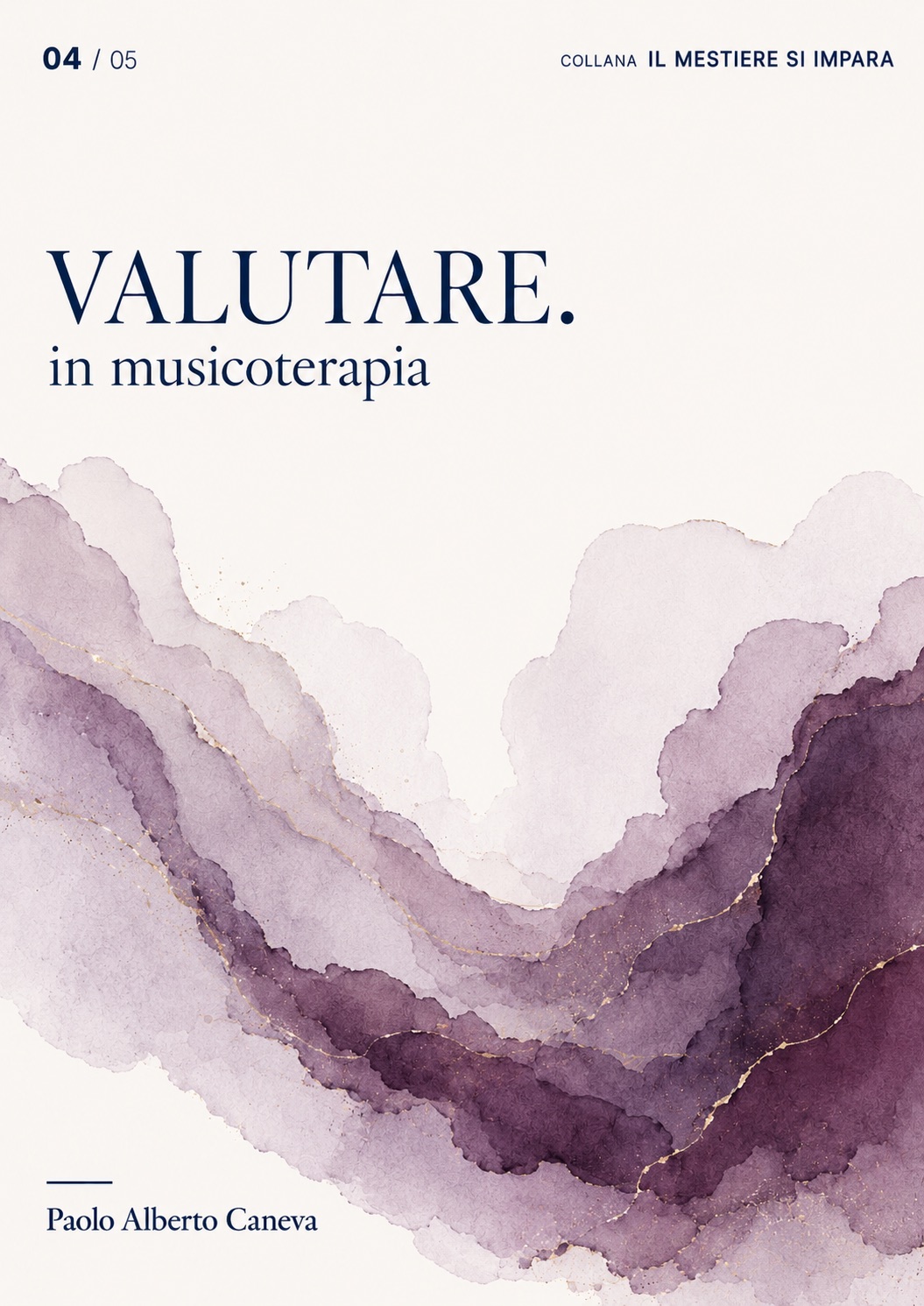
Evaluating in Music Therapy
From "they are doing better" to something that can be verified · In Italian
"The participants are doing better" is not a result: it is an impression. This volume teaches how to build the sentence that replaces it — with which measures, collected when, by whom — and how to read the measures of the other professionals the music therapist works with every day. It is the volume that turns "music is good for you" into data anyone can verify.
Download the free PDF →Why this volume exists
Because every project needs at least one measure that speaks to the setting and at least one measure that sees the music. The first is chosen in volume 5, "Other People's Tools", this volume's inseparable companion; the second is chosen here.
And it is the volume that teaches how to read any measure: without it, a repertoire of tests remains a mute catalogue.
What you find in the PDF (42 pages)
The foundations of measurement in plain words: construct and indicator, reliability, validity, sensitivity to change
Baselines, the before-after comparison with its honest limits, single-case designs, clinical significance, triangulation
Structured observation and the clinical diary, individualized scales, goal attainment scaling, the report
The six music therapy tools to know: IMTAP, IMCAP-ND, MATADOC, MiDAS, Bruscia's profiles and the Nordoff-Robbins/AQR scales
Who it is for
- → Music therapists who must document results to commissioners, management and teams
- → Students working on the evaluation plan of a placement project or thesis
- → Anyone choosing among the discipline's own tools, knowing what is validated and what is not
- → Anyone working where "music is good for you" is no longer enough of an argument
Download the PDF — it's free
Creative Commons BY-NC-SA 4.0 license. Share it freely, citing the source. The volume is in Italian.
How to cite: Caneva, P. A. (2026). Valutare in musicoterapia. https://canevapaolo.it
Go to Resources and download →Questions? Mentoring is the right place.