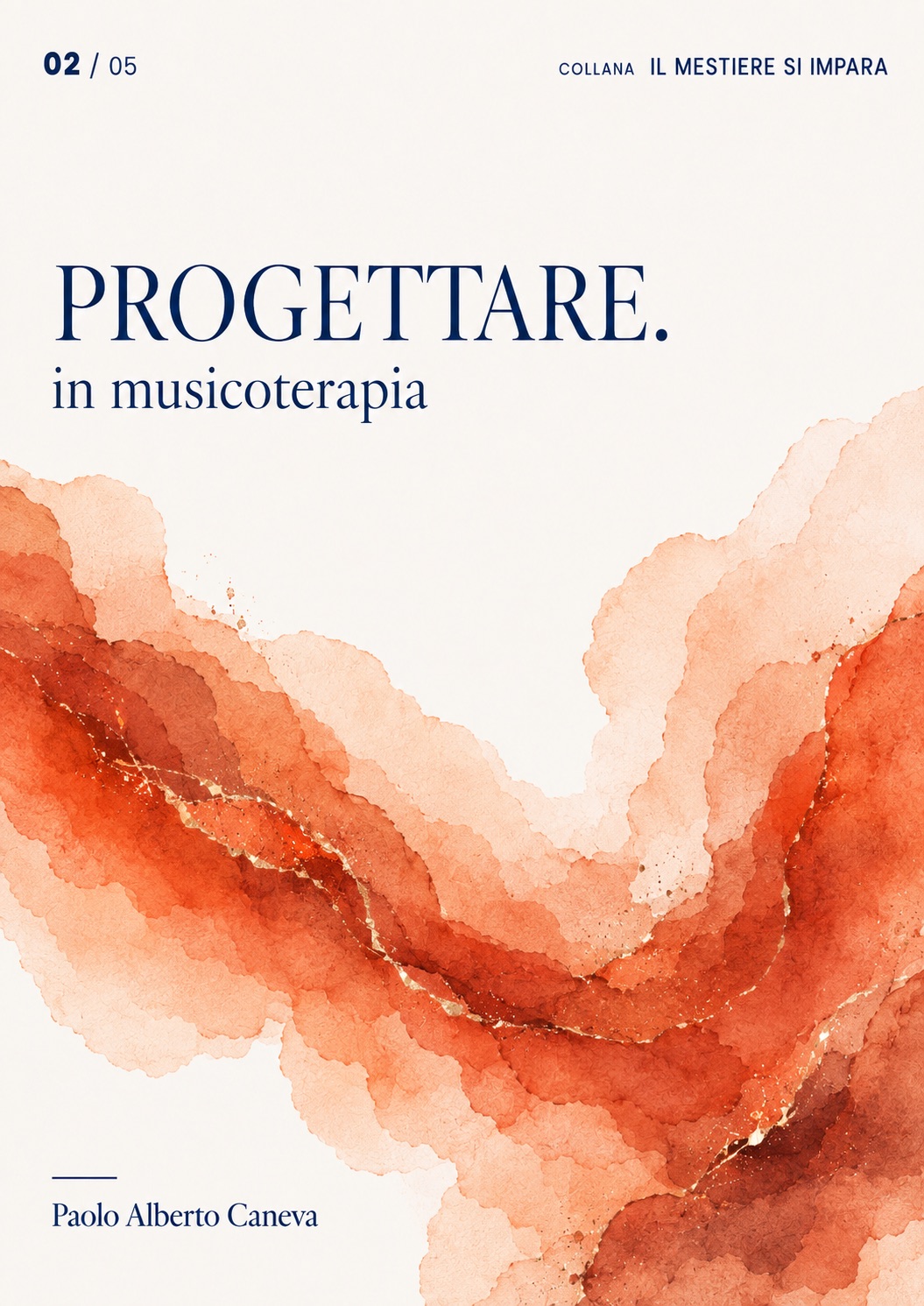
Designing Music Therapy Projects
A project that withstands an uncomfortable question · In Italian
The central volume of the series: how to turn a clinical intuition into a clear, credible, defensible project — a needs analysis grounded in data, measurable goals, a replicable methodology, a timeline, a transparent budget, an evaluation plan. A single case runs through every chapter, from the first observation to the complete project commented line by line.
Download the free PDF →Why this manual exists
A music therapist works well in a facility for three years. Then the management changes, someone asks "what results does this activity produce?", and there is no document to answer. The activity closes — not because it wasn't working, but because no one could prove it.
This manual exists to prevent that story. Because a well-written project is not bureaucracy: it is the way your work produces the evidence of itself.
What you find in the PDF (65 pages)
The bridge metaphor: aims, objectives, activities, outputs, outcomes, impact — every technical term translated and explained
One by one, with the typical mistakes reviewers spot at first glance
Theory of Change, Logical Framework, SMART objectives, Results-Based Management — and the stakeholders
And the complete project, commented line by line
Presenting, negotiating, answering calls for proposals, disseminating
A fillable template, checklists, an informed-consent outline, a glossary
Who it is for
- → Music therapy students writing their first placement project
- → Professionals seeking recognition from the healthcare, educational and social systems
- → Anyone answering a call for proposals or presenting a project to institutions and foundations
- → Anyone who has to defend an activity that works, with the evidence in hand
Download the PDF — it's free
Creative Commons BY-NC-SA 4.0 license. Share it freely, citing the source. The volume is in Italian.
How to cite: Caneva, P. A. (2026). Progettare in musicoterapia. https://canevapaolo.it
Go to Resources and download →Questions? Mentoring is the right place.